Advice
How long does it take to build a mobile app?
By Rocket Lab AustraliaPublished Updated 6 min read
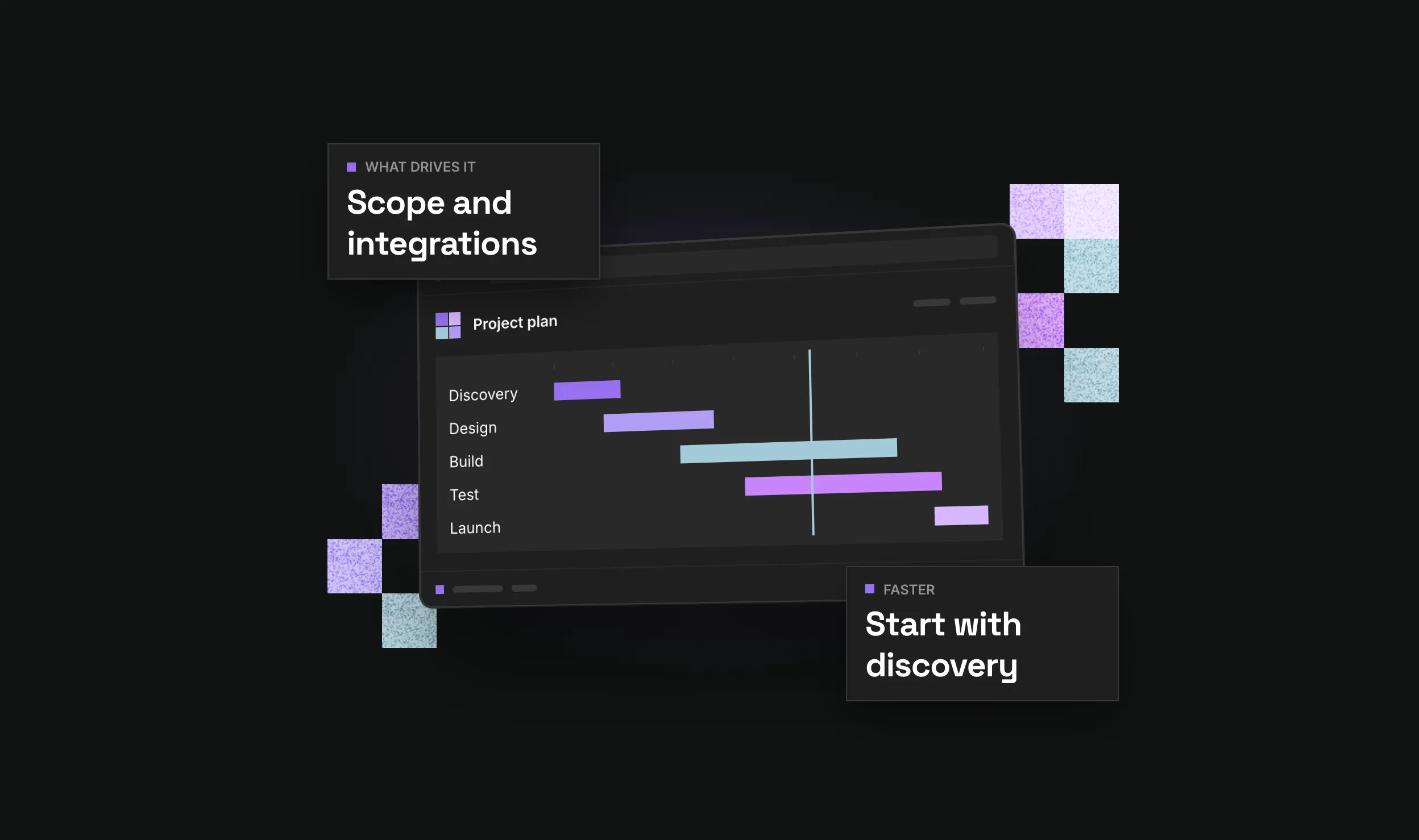
As a guide, a focused first release of a mobile or web app usually takes 2 to 3 months, a medium-sized app 4 to 6 months, and a larger platform 6 months or more. Those are the ranges we publish for our own projects (in the FAQs on our home page and our Mobile App Development page), and discovery confirms the timeline for your app before the build starts.
The rest of this guide explains where your app is likely to land in those ranges: what drives the timeline, what happens in each phase, real timelines from our case studies, and how to get to launch sooner without cutting corners.
The short answer
- Focused first release: 2 to 3 months. One clear job for one main type of user, with a small number of integrations.
- Medium-sized app: 4 to 6 months. More screens and user roles, a backend of its own and several integrations.
- Larger platform: 6 months or more. Several apps or portals working together, many integrations and existing business systems to connect to.
We publish the same ranges for Flutter apps, React Native apps and React web apps, because the framework matters far less to the timeline than the scope does.
These are ranges, not quotes. The timeline for your app comes out of discovery, once the scope, the platforms and the integrations are clear.
What drives the timeline
Five things move an app from one end of a range to the other, or into the next range.
- Platforms: iOS, Android, web, or all three. One cross-platform codebase in React Native or Flutter serves iOS and Android together; separate native apps mean separate codebases to build and test.
- Integrations: every payment provider, identity service, map, CRM or internal system the app talks to adds design, build and testing time. Integrations with existing business systems are often where the surprises are, so they are worth testing early.
- Design depth: an interface built from a well-designed set of standard components is quicker than a highly custom, animated one. A new brand or design system adds its own work before screens can be built.
- AI features: a feature built on a language model needs more than the feature itself. It needs a set of test cases to check the model's answers, guardrails for what it may and may not do, and time to tune it against real examples.
- Approvals and decisions: how quickly content, feedback and sign-offs come back, and how many people need to agree. App Store and Google Play review also sits between a finished build and a public launch.
The size of the first release matters most of all. Every screen, user role and edge case you add to it has to be designed, built and tested.
Real timelines from our projects
These are the timelines published in our case studies. Each project had its own scope, so read them as examples, not benchmarks.
- Sven Jobs, a mobile-first recruitment app for job seekers and employers built in Flutter: 10 weeks to launch.
- Lasoo, a deals platform across web and mobile: 16 weeks from discovery to production-ready.
- Superloop, an iOS and Android app in React Native with a headless CMS serving app and web: about 20 weeks from discovery to production.
- Erin Living, a React Native app for homeowners and tenants with a web app and backend: 24 weeks from discovery to initial production rollout.
- CSIRO's Bushfire Surveyor, an offline-first survey system across mobile and web: about 40 weeks from discovery to production.
- Before You Buy, a property due-diligence platform with a website, customer portal, admin and an inspector app, built from scratch: 2 months of wireframing, design thinking and architecture, then a 9-month build.
The phases of an app project
Most app projects move through the same five phases. They overlap more than a list suggests: design for later features often carries on while the first ones are being built.
Discovery
Workshops to understand your business, your users and the problem the app solves. Discovery settles the scope of the first release, the platforms, the integrations and the architecture, and ends with a timeline and project plan. It is the phase that most reduces risk in the rest of the project. Read more about digital product discovery.
Design
Low to mid-fidelity wireframes first, so the user flows are right before anyone works on the look. Then the interface design, and a design system if the product needs one.
For WeView, the design phase took six weeks: the team designed the whole ecosystem end to end, across the app, booking and admin portals.
Build
Development in fortnightly sprints, each ending in a show and tell, so you see working software every two weeks and can change direction early rather than late. The backend, the integrations and the apps are built side by side.
Test
Testing belongs in every sprint, not only at the end, and finishes with user acceptance testing: you and your users try the app on real devices before it goes to the stores. Apps with AI features are also checked against their test cases before release.
Launch
Store listings, App Store and Google Play review, and the release itself. After launch the work moves to support and maintenance: fixes, operating system updates and new features based on what your users do.
How to build an app faster
- Start with discovery. It feels slower, but a clear scope and architecture prevent the rework that stretches timelines most.
- Keep the first release focused. Release the core features first, then add to them based on your customers' feedback and priorities. For a large platform, plan a phase one, two and three rather than building everything at once.
- Use one codebase where you can. A cross-platform app in React Native or Flutter builds and tests iOS and Android together.
- Reuse what you already have. An existing backend, API, identity service or design system is work that does not need doing again.
- Test integrations early. Connect to third-party and internal systems in the first sprints, while there is still time to adjust.
- Make decisions quickly. Name one decision-maker, agree how feedback works and keep sign-offs moving.
- Use AI tools with care. AI coding tools can speed up parts of a build, but their output still needs careful review by experienced engineers. See how AI-assisted development speeds up React Native builds without cutting corners.
If you already have an AI-built prototype, the fastest route to production is often to find out what in it can be kept. Our App Rescue Report does that.
Frequently asked questions
How long does it take to build a mobile app?
A focused first release usually takes 2 to 3 months, a medium-sized product 4 to 6 months and a larger platform 6 months or more. Discovery confirms the timeline before the build starts.
Is a web app quicker to build than a mobile app?
Not necessarily. We publish the same ranges for React web apps as for mobile apps: 2 to 3 months for a focused first release, 4 to 6 months for a medium-sized app and 6 months or more for a larger platform. The scope, the integrations and the design matter more than whether the app runs in a browser or on a phone.
Does building for both iOS and Android take twice as long?
Not when both apps come from one cross-platform codebase in React Native or Flutter. Separate native apps for each platform mean two codebases to build and test.
Can you give me an exact timeline?
Yes, after discovery. Before then, the ranges above are a useful guide. Discovery settles the scope, the platforms and the integrations, and turns them into a timeline and project plan for your app.
What does an app need after launch?
An app needs regular updates to keep passing App Store and Google Play review and to keep working on new devices. Our mobile app maintenance plans cover that work, and new features are scoped as you need them.
Talk to us about your timeline
- Talk to the team. Book a free 30-minute consultation and we will talk through your app, your deadline and what drives its timeline.
- Prefer a call back? Request a callback: leave your number and a time that suits you, and we will call you.
Ava, our AI assistant, can help you put a project brief together.
Scope your project